What Are DTH Drilling Tools and Where Are They Used?
Jul 07, 2026
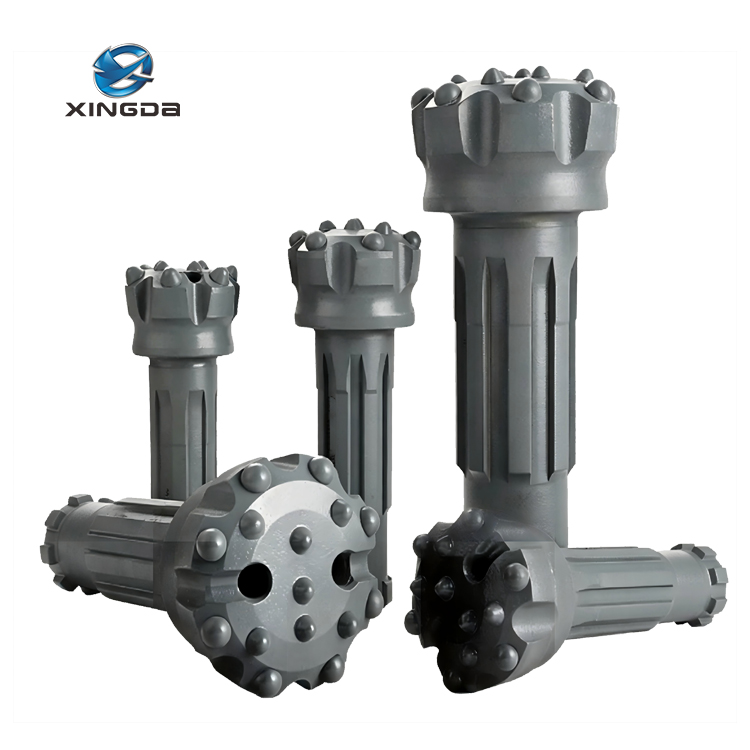
Drilling through hard rock is often one of the most demanding parts of mining, quarrying, construction, and water well projects. Conventional drilling tools may struggle in abrasive or fractured formations, leading to slow penetration, high tool wear, unstable hole quality, and increased operating costs.
DTH (Down-the-Hole) drilling tools use a pneumatic hammer located directly behind the bit to deliver powerful, direct impacts to the rock face . This minimizes energy loss, making it exceptionally efficient for hard rock drilling in mining, quarrying, and water well projects .
This unique drilling method gives DTH technology a strong advantage in speed, hole accuracy, and deep-hole performance. To achieve the best results, however, contractors and drilling companies must understand how DTH drilling tools work, which components are required, and how to select the right tools for different rock formations and applications.
DTH drilling tools are a complete set of down-the-hole components used with DTH drilling rigs to break rock by combining percussion and rotation. Unlike top hammer drilling, where impact energy is generated above the drill string, DTH drilling places the hammer directly at the bottom of the hole behind the drill bit.
This design allows impact energy to be transferred more efficiently to the rock surface, reducing energy loss through the drill string. As a result, DTH drilling is especially effective for medium-hard to very hard rock, deep holes, large-diameter holes, and applications where hole straightness is important.
A typical DTH drilling tool system includes:
| Component | Main Function | Key Selection Factor |
|---|---|---|
| DTH Hammer | Converts compressed air into high-frequency impact energy | Air pressure, hole diameter, rock hardness |
| DTH Drill Bit | Contacts and breaks the rock face | Bit face design, carbide buttons, shank type |
| DTH Drill Rod / Drill Pipe | Transfers rotation, feed force, and compressed air | Length, diameter, thread type, wall thickness |
| Shank Adapter / Bit Shank | Connects the hammer and bit | Must match the hammer model |
| Air Compressor | Provides compressed air for hammer operation and flushing | Air pressure and air volume |
For reliable performance, all DTH components must be compatible with each other and suitable for the drilling rig, compressor capacity, hole size, and geological conditions.
The working principle of DTH drilling is based on direct impact at the bottom of the hole. Compressed air enters the DTH hammer through the drill pipe and drives the internal piston. The piston repeatedly strikes the back of the DTH drill bit, while the drilling rig provides rotation and feed force.
At the same time, compressed air exits through the bit face to remove rock cuttings from the hole. This continuous process of impact, rotation, and flushing allows the bit to crush hard rock efficiently and keep the borehole clean.
The process can be summarized in four steps:
Compressed air flows through the drill pipe into the DTH hammer.
The hammer piston generates high-frequency impact energy.
The DTH drill bit transfers this impact directly to the rock face.
Air flushes broken rock cuttings out of the borehole.
Because the hammer works at the bottom of the hole, DTH drilling maintains stable impact energy even at greater depths. This is one of the main reasons why DTH drilling is widely used in deep-hole and hard rock applications.
The DTH hammer is the core power component of the system. It determines drilling efficiency, energy transfer, air consumption, and penetration rate. DTH hammers are usually selected based on hole diameter, working pressure, compressor capacity, and rock hardness.
Common DTH hammer types include:
| Hammer Type | Suitable Conditions | Main Advantage |
|---|---|---|
| Low-Pressure DTH Hammer | Shallow drilling, smaller compressors | Lower air consumption |
| Medium-Pressure DTH Hammer | General mining, quarrying, and water well drilling | Balanced performance and cost |
| High-Pressure DTH Hammer | Hard rock, deep holes, high productivity projects | Faster penetration and stronger impact |
A high-quality DTH hammer should provide stable impact frequency, good air distribution, long service life, and easy maintenance.
The DTH drill bit is the direct cutting tool that contacts the rock. It must withstand repeated impact, abrasion, heat, and complex geological conditions. The performance of the bit directly affects penetration rate, hole straightness, bit life, and total drilling cost.
DTH drill bits are commonly designed with tungsten carbide buttons. The button shape, bit face design, flushing holes, and steel body quality all influence drilling performance.
Common DTH bit face designs include:
| Bit Face Design | Suitable Rock Formation | Main Advantage |
|---|---|---|
| Flat Face | Most rock formations, especially hard rock | Good stability and all-around performance |
| Convex Face | Soft to medium-hard abrasive rock | Fast penetration rate |
| Concave Face | Medium-hard to very hard rock | Better hole straightness and control |
| Drop Center Face | Deep holes and deviation-sensitive drilling | Improved centering performance |
| Retrac Face | Broken or fractured formations | Easier hole cleaning and bit retrieval |
Choosing the wrong bit face can cause slow drilling, hole deviation, excessive wear, and higher replacement costs. For hard rock and deep-hole drilling, concave or drop center designs are often preferred because they help maintain straighter holes.
DTH drill rods and drill pipes connect the drilling rig to the hammer and bit. They transfer rotation, feed force, and compressed air to the bottom of the hole. Strong and accurate drill pipes are essential for safe and efficient drilling.
Important factors when selecting DTH drill rods include:
Outer diameter and wall thickness
Thread type and connection strength
Pipe length and straightness
Steel grade and heat treatment
Resistance to fatigue, bending, and wear
For demanding mining and quarrying projects, heavy-duty DTH drill pipes can reduce breakage risk and improve drilling stability.
DTH drilling tools are widely used in industries that require efficient rock penetration, stable hole quality, and reliable performance in hard formations.
In open-pit mining, DTH drilling tools are commonly used for blast hole drilling. Mining companies require accurate hole depth, consistent diameter, and fast penetration to improve blasting efficiency and production output.
DTH drilling is suitable for:
Open-pit mine blast holes
Hard rock mining
Pre-split drilling
Production drilling
Large-diameter drilling
Because DTH drilling provides good hole straightness and high impact energy, it helps reduce drilling deviation and improve blasting results.
Quarries use DTH drilling tools for drilling blast holes in granite, limestone, basalt, marble, and other rock materials. The drilling tools must perform reliably in abrasive and high-strength formations.
DTH drilling helps quarry operators improve:
Drilling speed
Hole accuracy
Rock fragmentation
Tool service life
Overall production efficiency
For quarrying applications, bit durability and hammer stability are especially important because abrasive rock can quickly wear low-quality tools.
DTH drilling is widely used in water well drilling because it can penetrate hard rock layers efficiently and maintain stable drilling performance at depth. In many regions, aquifers are located below complex rock formations, making DTH tools a practical choice.
DTH drilling tools are suitable for:
Domestic water wells
Agricultural irrigation wells
Industrial water wells
Geothermal wells
Deep boreholes
The combination of strong impact force and effective air flushing makes DTH drilling especially useful in dry, hard, or fractured rock formations.
In construction, DTH drilling tools are used for foundation work, anchoring, piling, slope stabilization, and infrastructure projects. Contractors often choose DTH drilling when ground conditions include hard rock, boulders, or mixed formations.
Typical construction applications include:
Foundation drilling
Rock anchoring
Micropiles
Slope protection
Road and bridge construction
Tunneling support
DTH drilling helps contractors achieve better hole straightness and reliable drilling depth in difficult ground conditions.
DTH drilling tools are also used in geothermal drilling and geological exploration. These projects often require deep, stable, and accurate boreholes in challenging formations.
For exploration work, DTH drilling can provide faster penetration in hard rock and help reduce downtime caused by tool wear or poor hole cleaning.
DTH drilling and rotary drilling are both common methods, but they break rock in different ways. DTH drilling uses direct percussive impact, while rotary drilling relies mainly on crushing, scraping, or shearing.
| Drilling Method | Rock-Breaking Mechanism | Best Use Case | Limitation |
|---|---|---|---|
| DTH Drilling | Direct impact from a downhole hammer | Hard, abrasive, fractured, and deep rock formations | Requires sufficient air compressor capacity |
| Tricone Rotary Drilling | Crushing and gouging with rotating cones | Soft to hard formations | Slower in very hard rock compared with DTH |
| PDC Rotary Drilling | Shearing with fixed diamond cutters | Uniform soft to medium-hard formations | Less suitable for broken, interbedded, or very hard rock |
| Top Hammer Drilling | Impact generated above the drill string | Small to medium hole diameters, shorter holes | Energy loss increases with hole depth |
For hard rock drilling, DTH drilling is usually more efficient than rotary drilling because the impact force is delivered directly to the bit. This results in faster penetration, better energy transfer, and more stable performance in difficult formations.
Top hammer drilling is effective for smaller holes and shallow drilling, especially in construction and surface drilling. However, as hole depth increases, impact energy must travel through the drill string, which can reduce efficiency and increase deviation.
DTH drilling places the hammer at the bottom of the hole, so impact energy is delivered directly to the bit. This makes DTH drilling more suitable for:
Deeper holes
Larger hole diameters
Hard rock formations
Straighter boreholes
High-productivity drilling projects
For projects that require depth, accuracy, and hard rock performance, DTH drilling often provides a better balance of speed and reliability.
Selecting the right DTH drilling tools requires more than simply matching a hammer and bit. The entire drilling system must be considered.
The hole diameter determines the size of the DTH hammer and bit. Larger holes usually require larger hammers, higher air consumption, and more powerful compressors.
Rock hardness, abrasiveness, fractures, and moisture conditions all affect tool selection. Hard and abrasive rock requires durable carbide buttons, strong bit bodies, and reliable hammer performance.
The bit shank must match the hammer model. Common shank types include DHD, QL, Mission, SD, CIR, and other industry-standard designs. A mismatch can cause energy loss, component damage, or complete drilling failure.
DTH drilling performance depends heavily on compressed air. Insufficient air pressure or air volume can reduce hammer impact power, slow penetration, and cause poor cuttings removal.
For deep holes or applications requiring accurate alignment, bit face design, drill pipe straightness, and hammer stability are critical.
The cheapest tool is not always the most cost-effective option. A high-quality DTH hammer and bit can reduce downtime, improve penetration rate, extend service life, and lower the cost per meter drilled.
| Problem | Possible Cause | Solution |
|---|---|---|
| Slow penetration rate | Wrong bit design, low air pressure, worn buttons | Select suitable bit face, check compressor output, replace worn bit |
| Excessive bit wear | Highly abrasive rock, poor carbide quality | Use wear-resistant bit and proper button design |
| Hole deviation | Wrong bit face, unstable feed pressure, bent drill pipe | Use concave/drop center bit and check drill pipe straightness |
| Hammer not working properly | Insufficient air supply, internal wear, poor lubrication | Check air pressure, maintain hammer, use correct oil |
| Poor cuttings removal | Low air volume or blocked flushing holes | Increase air volume and inspect bit flushing holes |
| Frequent tool breakage | Mismatched components or poor steel quality | Use compatible hammer, bit, and drill pipe from a reliable supplier |
For drilling contractors, mining companies, quarry operators, and water well drilling teams, tool reliability directly affects project efficiency and operating cost. Working with a professional DTH drilling tools manufacturer and supplier helps ensure better compatibility, stable quality, and technical support.
A reliable DTH drilling tools supplier should provide:
Multiple DTH hammer sizes and pressure options
DTH drill bits for different rock formations
Compatible shank designs such as DHD, QL, Mission, SD, and CIR
Heavy-duty DTH drill rods and drill pipes
Custom recommendations based on drilling rig and compressor specifications
Stable product quality and strict inspection
Support for mining, quarrying, construction, and water well drilling applications
For buyers, the right supplier is not only a product source but also a technical partner that helps improve drilling efficiency and reduce cost per meter.
DTH stands for Down-the-Hole. It refers to a drilling method where the hammer works directly behind the drill bit at the bottom of the hole.
The main parts include the DTH hammer, DTH drill bit, drill pipe or drill rod, shank connection, and air compressor.
DTH drilling is especially suitable for medium-hard, hard, very hard, abrasive, and fractured rock formations.
Yes. DTH drilling is widely used for water well drilling because it can penetrate hard rock efficiently and maintain stable performance at depth.
You should choose a DTH drill bit based on hole diameter, hammer type, shank design, rock hardness, abrasiveness, and required hole straightness.
The shank transfers impact energy from the hammer piston to the bit. If the shank does not match the hammer, the system may lose energy, wear quickly, or fail during operation.
In top hammer drilling, impact energy is generated above the drill string. In DTH drilling, the hammer works at the bottom of the hole, which provides better energy transfer for deeper and harder rock drilling.
DTH drilling tools are essential for efficient hard rock drilling in mining, quarrying, construction, water well, geothermal, and exploration projects. By placing the hammer directly behind the drill bit, DTH drilling reduces energy loss and delivers strong impact force exactly where it is needed.
To achieve better drilling performance, it is important to select the right DTH hammer, DTH drill bit, drill pipe, bit face design, and shank type according to the actual drilling conditions. A well-matched DTH drilling system can improve penetration rate, reduce downtime, extend tool service life, and lower total drilling cost.
As a DTH drilling tools manufacturer and supplier, we provide DTH hammers, DTH drill bits, DTH drill rods, and DTH drill pipes for mining, quarrying, construction, and water well drilling projects. Contact our team to get professional recommendations and find the right DTH drilling tools for your drilling rig, compressor, rock formation, and project requirements.
Get A Quote?
If you are interested in any of our products or would like to make your customized order, please feel free to contact us. We are looking forward to establish successful business relations with you.
Quick Links
Quick Links
Overssale Business
Overssale Business
Tel: +86 714 3860 269
Phone: +86 189 8659 6914
WhatsApp: +86 189 8659 6914
WeChat: +86 189 8659 6914
Email: sales@xingdamachinery.com
ADD: No 7and 8 Factory, #9 Bingang Road, Ezhou, Hubei Province, China
Get The Latest News
Get The Latest News


