What is DTH Drilling?
Jul 29, 2026
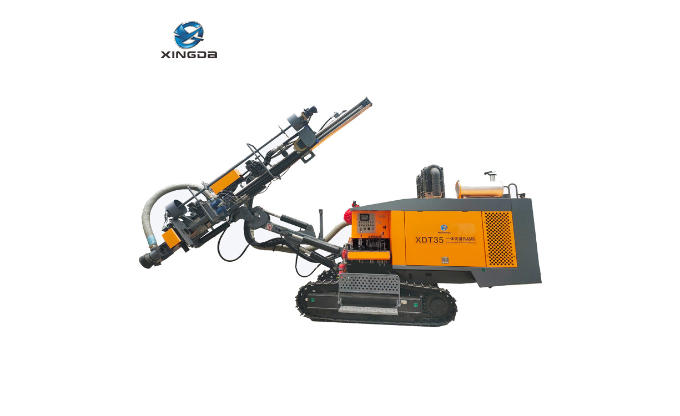
Down-the-hole drilling (DTH) essentially involves a drilling hammer at the bottom of a drill string. It relies on three elements for drilling holes: bit loading (weight), rotation and air. These active elements combine to be efficient at crushing rock. As the drill string slowly rotates, the drilling hammer is forced into the rock repeatedly. Striking power is provided by compressed air driving a piston inside the hammer.
Down-the-hole (DTH) drilling has made it easier for contractors to drill wells faster and more efficiently, and to transition from dirt boring to rock boring just by adding a compressor and hammer to the drill bit.
Usually, contractors working on a dirt bore would pack up and move on to the next dirt bore when they encountered rock, leaving the rock boring for another contractor to complete.
With DTH drilling, contractors can change the drill that they were using for the current directional bore to a rock drill when they encounter rock by connecting the drill with a compressor and a steerable hammer.
DTH drilling is often used in the mining industry (blast hole drilling), on construction sites, drilling water wells, and in the oil and gas industry.
Among all the drilling method, down-the-hole (DTH) drilling is increasingly used and can be very effective in some cases. Down-the-hole drilling mainly has the following six specific applications.
1. Mining includes Surface drilling and Underground drilling
2. RC – Exploration includes Exploration and Grade control
3. Quarrying includes Aggregate & limestone and Dimension atone industry
4. Construction includes Civil engineering
5. Well drilling includes Water well and Energy well
6.Oil and gas includes Shallow drilling and Seismic
The DTH hammer is pneumatically powered, with the compressed air propelling it forward to impact and fracture rock. Compressed air also travels through the drill bit into the hole (air exhaust), which blows the chips and dust out of the hole.
From environmental and social perspectives, DTH is a good option because it produces much less noise and vibration than many other drilling methods. Quieter drilling means it is often the preferred drilling method when used in cities and populated areas.
The DTH method is the most productive and cost-effective method. It is environmentally friendly, as it produces lesser noise and vibration compared to other drilling methods making it ideal for cities.
It also leaves a lesser carbon footprint as it uses low amounts of drilling mud and additives, reducing the amount of drilling fluid that needs to be recycled and disposed of, in turn reducing the number of trips required for disposal of used mud.
This technology will help contractors do more in lesser time at lesser cost and help keep ahead in a very competitive market.
XDDRILL is a professional DTH Drilling Rigs manufacturer and factory in China, providing reliable DTH drilling rigs for sale for mining, quarrying, foundation drilling, water well drilling, and other hard rock drilling applications. If you are looking for high-performance DTH drilling equipment, down-the-hole drill rigs, or customized drilling solutions, XDDRILL can help you select the right model according to your drilling depth, hole diameter, rock formation, and project requirements.
Get A Quote?
If you are interested in any of our products or would like to make your customized order, please feel free to contact us. We are looking forward to establish successful business relations with you.
Quick Links
Quick Links
Overssale Business
Overssale Business
Tel: +86 714 3860 269
Phone: +86 189 8659 6914
WhatsApp: +86 189 8659 6914
WeChat: +86 189 8659 6914
Email: sales@xingdamachinery.com
ADD: No 7and 8 Factory, #9 Bingang Road, Ezhou, Hubei Province, China
Get The Latest News
Get The Latest News


