The Comprehensive Guide to Down the Hole Hammers
Jul 29, 2026
Drilling through hard and abrasive rock requires equipment capable of delivering high impact energy while maintaining borehole accuracy. This is where down-the-hole hammers have become an essential part of modern rock drilling operations.
A down-the-hole hammer, commonly called a DTH hammer, delivers repeated percussive blows directly behind the drill bit. Because the impact mechanism operates at the bottom of the borehole, energy loss is minimized, enabling efficient penetration through medium-hard and extremely hard rock formations.
From mining and quarrying to water well construction, foundation engineering and geothermal drilling, DTH hammers provide the drilling speed, hole quality and reliability required for demanding projects.
This guide explains what a DTH hammer is, how it works, its main benefits, common applications and how to select a suitable hammer for your drilling project.
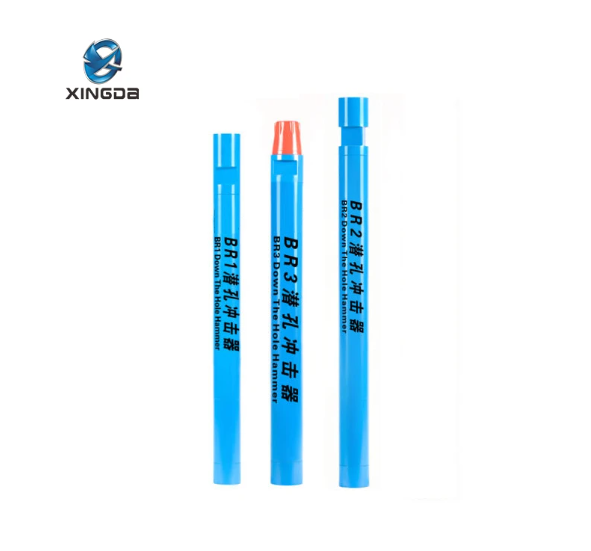
A down-the-hole hammer is a pneumatic percussion drilling tool installed between the drill pipe and the DTH drill bit. It uses compressed air to drive an internal piston, which repeatedly strikes the back of the drill bit and transfers impact energy directly into the rock.
Unlike top hammer drilling, where impact energy travels through the entire drill string, the impact mechanism of a DTH system remains close to the bottom of the hole. This arrangement reduces energy loss, particularly when drilling deeper boreholes.
A typical DTH drilling system consists of:
An air compressor
A drilling rig
Drill pipes
A DTH hammer
A compatible DTH drill bit
Rotation and feed mechanisms
The drill rig rotates the drill string while the hammer delivers rapid impacts to the bit. Compressed air also removes rock cuttings from the borehole, allowing the drilling process to continue efficiently.
DTH hammers are especially suitable for medium-hard, hard and highly abrasive rock. XDDRILL models are designed to provide stable impact energy, effective cuttings removal and low air consumption across different rock-drilling conditions.
The working principle of a DTH hammer combines pneumatic impact, drill string rotation and compressed-air flushing.
A high-pressure air compressor sends compressed air through the drill pipe and into the internal air passages of the hammer.
The required pressure and air volume depend on the hammer size, hole diameter, drilling depth and geological conditions. A properly matched air compressor is important because insufficient airflow can reduce impact frequency and make cuttings removal less effective.
Inside the hammer, compressed air drives a hardened piston rapidly up and down. The internal air-distribution structure alternately directs air to different sides of the piston, creating continuous reciprocating movement.
The piston is manufactured to withstand repeated high-energy impacts and demanding operating conditions.
During each downward stroke, the piston strikes the impact surface at the rear of the DTH drill bit. The resulting energy passes directly into the carbide buttons on the bit face.
These buttons crush, chip and fracture the rock at the bottom of the borehole.
Because the hammer is positioned directly behind the bit, the distance over which impact energy must travel is very short. This allows the drilling system to maintain effective rock-breaking performance as the hole becomes deeper.
While the piston delivers impact energy, the drilling rig slowly rotates the hammer and bit. Rotation brings the carbide buttons into contact with new areas of rock after every impact.
The combination of percussion and rotation creates a round, consistent borehole and prevents the bit from repeatedly striking the same position.
After powering the piston, the compressed air exits through openings in the drill bit. It carries crushed rock particles upward through the annular space between the drill pipe and borehole wall.
Effective flushing prevents excessive recutting of broken rock, reduces unnecessary bit wear and keeps the bottom of the hole clear. XDDRILL’s central-exhaust hammer design is intended to support efficient powder discharge while reducing repeated crushing of rock fragments.
1. Precision and Accuracy
DTH hammers are designed to create straight and clean boreholes, ensuring alignment even in challenging conditions. This is critical for projects like foundation drilling and blasthole drilling, where accuracy is paramount.
2. Enhanced Drilling Efficiency
By delivering energy directly to the drill bit, DTH hammers provide faster penetration rates. This means shorter project timelines and reduced costs.
3. Versatility Across Applications
Our hammers excel in various environments, from soft formations to the hardest rock. Whether you’re working on utility shaft construction or large-scale mining, DTH hammers & bits can be tailored to your specific application requirements.
4. Durability and Longevity
Built to endure extreme conditions, our DTH hammers are crafted from the highest-quality materials, ensuring long-lasting performance with minimal maintenance requirements.
5. Cost-Effectiveness
With faster drilling speeds and robust designs, DTH hammers save both time and money, making them an economical choice for complex projects.
DTH hammers are widely used to create production and pre-split blastholes in open-pit mines. Their stable penetration and hole-straightness characteristics help operators achieve more predictable blasting patterns.
Typical mining applications include:
Ore extraction
Bench drilling
Controlled blasting
Pre-splitting
Overburden removal
Hard-rock excavation
Quarries use DTH hammers to drill holes in limestone, granite, basalt, marble and other stone formations.
Accurate hole placement is important for splitting stone, controlling blast patterns and reducing damage to usable material. DTH drilling is suitable for both aggregate production and dimension-stone operations.
In areas where groundwater is located beneath hard rock, DTH hammers can provide faster penetration than conventional rotary drilling alone.
Compressed air simultaneously powers the hammer and removes cuttings from the borehole. Depending on the formation, drilling contractors may use casing systems to stabilize loose or fractured upper layers before continuing into competent rock.
DTH hammers are used for foundation holes, micropiles, bridge construction, retaining systems and other civil-engineering projects.
The ability to drill accurately through hard layers makes them valuable when a foundation project encounters boulders, bedrock or mixed geological conditions.
Road cuts, railway slopes, open-pit mine walls and construction excavations may require anchor holes for stabilization.
Portable or crawler-mounted DTH drilling rigs can be used to drill at different angles, including horizontal and inclined holes. The hammer helps penetrate hard rock while maintaining the alignment required for installing anchor rods or cables.
Geothermal projects often require deep boreholes in competent rock. DTH hammers can support geothermal well construction by providing reliable rock-breaking performance and efficient cuttings removal.
DTH drilling is also used in tunnel development, highway construction, utility installations and large infrastructure projects. Common tasks include rock excavation, drainage-hole drilling, pipe installation and controlled blasting.
XDDRILL identifies mining, quarrying, construction, water well, geothermal and challenging geological formations as key application areas for its DTH hammer range.
Selecting a hammer based only on price can result in poor drilling performance or premature component wear. Buyers should evaluate the complete drilling system and project conditions.
The planned hole diameter determines the appropriate hammer size and drill-bit diameter. The hammer must be compatible with the bit while allowing sufficient clearance for compressed air and cuttings to travel upward.
Consider the rock’s hardness, abrasiveness, fracture pattern and overall stability.
Hard, compact rock generally requires strong impact energy, while fractured formations may require careful adjustment of feed pressure and rotation speed to prevent jamming or excessive deviation.
The hammer’s operating pressure and air-consumption requirements must match the compressor.
A compressor that cannot provide sufficient pressure or airflow may cause:
Slow penetration
Weak impact performance
Poor cuttings removal
Increased bit wear
Hammer overheating
Borehole blockage
XDDRILL supplies hammer models with different working-pressure, air-consumption and hole-range specifications, allowing the hammer to be matched to the drilling rig and compressor. (XDDRILL)Shank Compatibility
The DTH hammer and bit must use the same shank design. Even when two products appear similar in size, incompatible shanks cannot be assembled correctly.
Confirm the required bit shank before ordering replacement hammers or drill bits.
Check the hammer’s connection thread and ensure that it matches the drill pipe or required adapter. Common connection specifications vary according to hammer size and drilling system.
Greater drilling depth increases the importance of airflow, cuttings removal and borehole stability. The hammer and compressor must provide enough capacity to maintain performance at the intended depth.
Before purchasing, ask whether the manufacturer can provide:
Pistons
Inner cylinders
Bushings
Check valves
O-rings and seals
Bit-retaining components
Maintenance instructions
Troubleshooting support
Reliable spare-parts availability can reduce downtime and extend the useful life of the drilling equipment.
Correct operation is essential for maintaining drilling performance and preventing avoidable damage.
Rock-drill oil should be supplied continuously with the compressed air. Insufficient lubrication may lead to excessive friction, overheating and premature wear of the piston and internal components.
Moisture, rust, dirt and other contaminants can damage internal surfaces. Inspect the compressor, air filters, hoses and lubricator regularly.
Do not allow the hammer to operate for extended periods when the bit is not in firm contact with the rock. Uncontrolled blank firing can place unnecessary stress on internal components.
Inspect the carbide buttons, bit body, flushing holes and shank. A severely worn bit reduces drilling efficiency and may increase stress on the hammer.
Excessive feed pressure can restrict rotation and cause the bit to stall. Insufficient feed pressure may lead to unstable contact and ineffective impact transfer.
Rotation speed should be adjusted according to hole diameter, hammer size and rock conditions.
After use, remove dirt and moisture, apply suitable protective oil and seal the hammer openings. Store the tool in a clean, dry location.
XDDRILL provides DTH hammers for rock engineering, mining, quarrying, construction, water wells and other demanding drilling applications.
Its hammer range includes different hole diameters, bit shanks, connection threads, operating pressures and air-consumption requirements. The products are designed around several practical priorities:
Efficient transfer of impact energy
Fast penetration through hard rock
Effective removal of rock cuttings
Reduced repeated crushing of cuttings
Low air consumption
Convenient assembly and disassembly
Straightforward maintenance
Reliable performance in continuous drilling
Customers can review the available specifications and configurations on the XDDRILL DTH hammer product page.
At XDDRILL, we are not only a DTH hammers manufacturer—we are also a drilling-solution partner.
Our team works closely with customers to understand the geological conditions, borehole diameter, drilling depth, compressor capacity, drill rig configuration and productivity requirements of each project. Based on this information, we can recommend suitable DTH hammers, bits and related drilling tools.
Whether a customer requires a hammer configuration for a specialized project, assistance matching the hammer to an existing drilling rig or technical support during operation, XDDRILL is committed to providing a practical solution.
XDDRILL has more than 20 years of manufacturing experience and operates a production base covering over 23,000 square meters. The company reports more than 450 production and testing machines and supplies drilling equipment to customers in multiple international markets. Its broader services include technical consultation, spare-parts support, maintenance assistance and customer training. (XDDRILL)ve that excellent tools contribute to successful projects. Therefore, XDDRILL continues to improve its product designs, manufacturing processes and technical services to meet changing drilling requirements.
Down-the-hole hammers are essential tools for modern hard-rock drilling. By delivering impact energy directly behind the drill bit, they offer an effective combination of drilling accuracy, penetration efficiency, versatility and durability.
However, achieving reliable performance requires more than choosing a hammer of the correct diameter. Buyers must also consider rock conditions, compressor capacity, operating pressure, bit-shank compatibility, drill pipe connections and spare-parts support.
XDDRILL is committed to supplying DTH hammers that meet the practical demands of mining, quarrying, water well, construction and infrastructure projects.
For a reliable and high-performance rock-drilling solution, explore our complete range of down-the-hole hammers or contact the XDDRILL team to discuss your hole diameter, rock formation, drilling depth and equipment configuration.
Get A Quote?
If you are interested in any of our products or would like to make your customized order, please feel free to contact us. We are looking forward to establish successful business relations with you.
Quick Links
Quick Links
Overssale Business
Overssale Business
Tel: +86 714 3860 269
Phone: +86 189 8659 6914
WhatsApp: +86 189 8659 6914
WeChat: +86 189 8659 6914
Email: sales@xingdamachinery.com
ADD: No 7and 8 Factory, #9 Bingang Road, Ezhou, Hubei Province, China
Get The Latest News
Get The Latest News


